


Biometric Personal Data Processing in Employer Information Systems: Principles and Limitations
https://doi.org/10.17803/1994-1471.2026.190.9.110-118
Abstract
The paper provides a comparative legal analysis of the regulation of the processing of biometric data of employees in the Russian Federation and the countries of the European Union. A key problem emerges: the Russian legal model, while formally declaring the priority of the subject's consent, in practice allows for broad exceptions justified by state and corporate interests, without proper verification of their proportionality. This leads to the erosion of the individual's sphere of private autonomy and creates the risk of establishing hyper-control over employees. The European model, based on the General Data Protection Regulation (GDPR), establishes a more balanced regime where prohibition is the rule, and any exception must be strictly justified and supported by principles such as proportionality, data minimization, transparency, and security. A key tool for complying with these principles is the mandatory data protection impact assessment (DPIA). The author substantiates the need to improve Russian legislation, arguing that this entails the risks of violating the constitutional principle of respect for working people, the right to privacy, and the fundamental duty of the state to ensure personal freedom. In conclusion, specific measures are proposed to improve Russian legislation, in particular the introduction of mandatory data processing impact assessments and the development of specialized methodological recommendations for employers.
About the Author
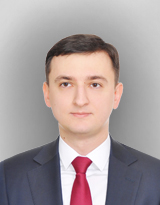
A. V. Menkenov
Institute of Law and National Security, The Russian Presidential Academy of National Economy and Public Administration (RANEPA)
Russian Federation
Russian Federation
Alexey V. Menkenov, Cand. Sci. (Law), Associate Professor, Department of Interdisciplinary Research and Programs, Higher School of Law
References
1. Dedov D. I. Metodologiya prava 2.0. — M.: Delo, 2023. — 750 s.
2. Ivanov A. A. Pravovoe regulirovanie biometrii v Rossii: zakon i praktika // Vestnik ekonomicheskogo pravosudiya Rossiyskoy Federatsii. — 2024. — № 11. — S. 52–62.
3. Kashkin S. Yu., Pokrovskiy A. V. Iskusstvennyy intellekt, robototekhnika i zashchita prav cheloveka v Evropeyskom Soyuze // Vestnik Universiteta imeni O.E. Kutafina (MGYuA). — 2019. — № 4. — S. 64–90.
4. Lushnikova M. V. Sushchnost i priroda prav rabotnika na zashchitu dostoinstva, trudovoy chesti i delovoy reputatsii // Vestnik Permskogo universiteta. Yuridicheskie nauki. — 2010. — Vyp. 1 (7). — S. 32–37.
5. Rassolov I. M., Chubukova S. G., Mikurova I. V. Biometriya v kontekste personalnykh dannykh i geneticheskoy informatsii: pravovye problemy // Lex russica. — 2019. — № 1. — S. 108–118.
6. Savelev A. I. Nauchno-prakticheskiy kommentariy k Federalnomu zakonu «O personalnykh dannykh». — M.: Statut, 2017. — 317 s.
7. Tal L. S. Trudovoy dogovor: tsivilisticheskoe issledovanie. — M.: Statut, 2006.
8. Trudovoe pravo: natsionalnoe i mezhdunarodnoe izmerenie: monografiya: v 2 t. T. 1: Obshchie problemy sovremennogo trudovogo prava / pod red. S. Yu. Golovinoy, N. L. Lyutova. — M.: Norma, 2022. — 608 s.
9. Filipova I. A. Transformatsiya pravovogo regulirovaniya truda v tsifrovom obshchestve. Iskusstvennyy intellekt i trudovoe pravo: nauchnoe izdanie. — N. Novgorod: Nizhegorodskiy gosudarstvennyy universitet imeni N.I. Lobachevskogo, 2019. — 89 s.
10. He S., Lei Y., Zhang Z., Sun Y., Li S., Zhang C., Ye J. Identity deepfake threats to biometric authentication systems: Public and expert perspectives // arXiv. — June 7, 2025. — URL: https://arxiv.org/abs/2506.06825.
11. Person identification, human rights and ethical principles: Rethinking biometrics in the era of artificial intelligence (PE 697.191, December 2021) / European Parliamentary Research Service; Scientific Foresight Unit. — European Union, 2021.
Review
For citations:
Menkenov A.V. Biometric Personal Data Processing in Employer Information Systems: Principles and Limitations. Actual Problems of Russian Law. 2026;21(9):110-118. (In Russ.) https://doi.org/10.17803/1994-1471.2026.190.9.110-118
Views:
2
JATS XML




 Email this article