


Establishing Paternity for Persons Born During the Period of the RSFSR Code on Marriage and Family

https://doi.org/10.17803/1994-1471.2025.181.12.081-089
Abstract
The relevance of the study can be justified by conclusion in 2024 of the Constitutional Court of the Russian Federation that for more than 28 years the courts of general jurisdiction and the Supreme Court misinterpreted Article 48 of the 1969 RSFSR Code on Marriage and Family (applied now pursuant to Article 169 of the Family Code) and wrongly treated the list of circumstances necessary for establishing paternity for persons born between 1 October 1968 and 1 March 1996 as exhausted. According to the Constitutional Court, Article 48 of the 1969 Code admits as sufficient proof the results of a judicial moleculargenetic expert examination confirming kinship between the citizen and the alleged father. As an argument, the Constitutional Court noted that the earlier legal regime (in force before the introduction of the Family Code), when applied with account of the Plenum of the Supreme Court of the USSR’s explanations, allowed appointment of forensicmedical examinations to clarify questions related to a child’s origin.
The author adheres to the traditional interpretation of Article 48 of the 1969 Code and adduces arguments indicating the exhausted character of the list of circumstances (and, accordingly, of the admissible evidence) necessary to establish paternity. At the same time, the Constitutional Court’s position — that construing Article 48 in a way that restricts the scope of proof in paternity cases and differentiates the set of evidence admissible solely based on a person’s date of birth is inconsistent with the principle of equality before the court — deserves attention. The author concludes that to eliminate an unjustified differentiation of the right to establish paternity depending on date of birth (i.e., the discrimination against persons born from 1 October 1968 to 1 March 1996) it is necessary to give Article 49 of the Family Code retroactive effect by making an explicit provision to that effect in Article 169 of the Family Code.
Keywords
Code on Marriage and Family,
establishment (determination) of paternity,
child’s origin,
Supreme Court of the Russian Federation,
Constitutional Court of the Russian Federation,
DNA testing (DNA examination),
molecular‑genetic examination,
forensic‑medical examination,
blood test,
discrimination
About the Author
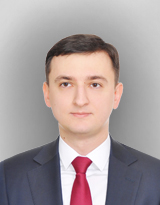
E. E. Lekanova
Yaroslavl State University named after P. G. Demidov
Russian Federation
Russian Federation
Ekaterina E. Lekanova, Postgraduate Student
Yaroslavl
References
1. Antokolskaya M. V. Semeynoe pravo: uchebnik. — M.: Norma: Infra M, 2013. — 432 s.
2. Efimova Yu. V. Ustanovlenie ottsovstva v iskovom proizvodstve // Vestnik Saratovskoy gosudarstvennoy yuridicheskoy akademii. — 2012. — № 3. — S. 173–183.
3. Kommentariy k Kodeksu o brake i seme RSFSR / pod red. S. N. Bratusya, P. E. Orlovskogo. — M.: Yuridicheskaya literatura, 1971. — 248 s.
4. Pchelintseva L. M. Semeynoe pravo Rossii: uchebnik. — M.: Norma, 2008. — 384 s.
5. Ryasentsev V. A. Semeynoe pravo: uchebnik. — M.: Yuridicheskaya literatura, 1971. — 296 s.
6. Ryasentsev V. A. Semeynoe pravo. Sovetskoe izobretatelskoe pravo / sost. B. A. Bulaevskiy, E. A. Morgunova. — M.: Prospekt, 2023. — 480 s.
7. Tadevosyan V. S. Sovetskaya semya i sotsialisticheskoe pravo: monografiya. — M.: Moskovskiy rabochiy, 1979. — 96 s.
8. Tarusina N. N. Negativnaya preemstvennost v semeynom prave: neskolko shtrikhov k portretu v stile ekspressionizma // Vestnik Yaroslavskogo gosudarstvennogo universiteta imeni P.G. Demidova. Seriya «Gumanitarnye nauki». — 2022. — № 1. — S. 70–81.
9. Tarusina N. N. Rebenok v prostranstve semeynogo prava: monografiya. — M.: Prospekt, 2014. — 144 s.
Review
For citations:
Lekanova E.E. Establishing Paternity for Persons Born During the Period of the RSFSR Code on Marriage and Family. Actual Problems of Russian Law. 2025;20(12):81-89. (In Russ.) https://doi.org/10.17803/1994-1471.2025.181.12.081-089
Views:
409
JATS XML




 Email this article