


The National Education System Identity in the Axiological Coordinates of Russian Statehood
https://doi.org/10.17803/1994-1471.2026.183.2.011-021
Abstract
The paper examines, from a constitutional law perspective, the identity of the Russian education system as a key element of sovereign state development. The author distinguishes between the categories of national and constitutional identity, arguing that in its constitutional process Russia is moving toward a more complete formalization of historically established values that determine the education system. The constitutional identity of the education system is defined as a set of its essential parameters shaped by the values, principles, linguistic and civilizational distinctiveness of the people, explicitly or implicitly enshrined in the Constitution of the Russian Federation and deriving from the national heritage. The key characteristics of this identity are determined as fundamentality, the unity of educating and upbringing, and the connection of education with life and the pursuit of progress. The author substantiates that Russian education is based on a holistic paradigm, in which the individual acquires meaning through service to the people and the state rather than through autonomy from society. This paradigm finds its constitutional consolidation, especially following the 2020 constitutional amendment, which directly linked education with the objectives of patriotic upbringing and the strengthening of sovereignty. The paper emphasizes the central role of the teacher as a bearer of the values of Russian civilization and provides a critical analysis of such challenges as the introduction of the competence-based approach and artificial intelligence technologies. Conceptual proposals are formulated for improving legislation and law enforcement practice in the field of education.
About the Author
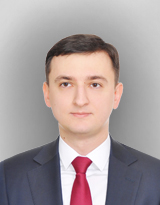
S. V. Kabyshev
Kutafin Moscow State Law University (MSAL), Honored Lawyer of the Russian Federation
Russian Federation
Russian Federation
Sergei V. Kabyshev, Professor
Department of Constitutional and Municipal Law
Moscow
References
1. Zorkin V. D. Lektsii o prave i gosudarstve. — SPb.: Konstitutsionnyy Sud Rossiyskoy Federatsii, 2024. — 352 s.
2. Identichnost: Lichnost, obshchestvo, politika. Novye kontury issledovatelskogo polya / otv. red. I. S. Semenenko. — M.: Ves mir, 2023. — 512 s.
3. Kabyshev V. T. Saratovskiy proekt Konstitutsii Rossii. — M.: Formula prava, 2006. — 64 s.
4. Makarenko A. S. Pedagogicheskie sochineniya : v 8 t. T. 1. — M.: Pedagogika, 1983. — 368 s.
5. Mendeleev D. I. Zavetnye mysli. — SPb.: Tipo-lit. M. P. Frolovoy, 1903–1905. — 428 s.
6. Sukhomlinskiy V. A. Izbrannye pedagogicheskie sochineniya : v 3 t. T. 1. — M.: Pedagogika, 1979. — 560 s.
7. Uvarov S. S. Gosudarstvennye osnovy. — M.: Institut russkoy tsivilizatsii, 2014. — 608 s.
8. Ushinskiy K. D. Sobranie sochineniy : v 10 t. T. 2: Pedagogicheskie stati 1857–1861 gg. — Moskva — L.: Izdatelstvo Akademii pedagogicheskikh nauk RSFSR, 1948. — 656 s.
Review
For citations:
Kabyshev S.V. The National Education System Identity in the Axiological Coordinates of Russian Statehood. Actual Problems of Russian Law. 2026;21(2):11-21. (In Russ.) https://doi.org/10.17803/1994-1471.2026.183.2.011-021
Views:
327
JATS XML




 Email this article