


Normative Legal and Value-Based Foundations of Interaction within the International Scientific and Educational Space under Conditions of a Crisis of Trust
https://doi.org/10.17803/1994-1471.2026.185.4.019-025
Abstract
In the context of developing geopolitical processes characterized by a range of challenges and threats, heightened scholarly attention has been directed toward the sphere of international cooperation. States that seek to construct a unified space of dialogue and trust-based partnership ground their relations of confidence in a shared system of values. The paper substantiates the significance of values as sociocultural determinants shaping the functioning of educational systems and informing their strategic approaches to international engagement. The potential of the educational sphere is conceptualized as a novel strategic mechanism for communication and institutionalization of trust within interstate relations. Particular emphasis is placed on the importance of maintaining continuous dialogue in the scientific and technological domain, irrespective of external factors.
The author highlights the integrative role of the Russian language as a unifying medium connecting diverse peoples across different religions and cultures. Educational migration is examined as a preferable instrument for sustaining demographic indicators without generating social tension. The study explains the continuation of diplomatic approaches wherein culture, language, and education function as instruments of soft power in an era marked by profound and often rigid transformations. Finally, the paper identifies the development of normative legal mechanisms designed to foster mutual trust among cooperating States in the fields of science and education as a matter of critical importance.
Keywords
law,
trust,
values,
education,
science,
foreign learners,
dialogue,
diplomacy,
educational migration,
Russian language
About the Author
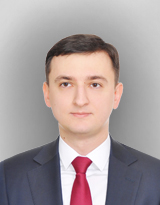
S. V. Volodina
Kutafin Moscow State Law University (MSAL)
Russian Federation
Russian Federation
Svetlana V. Volodina - Cand. Sci. (Law), Associate Professor, Department of Constitutional and Municipal Law, Kutafin Moscow State Law University (MSAL).
Moscow
References
1. Matveevskaya A. S., Pogodina V. L. Obrazovatelnyy turizm kak faktor «myagkoy sily» v mezhdunarodnykh otnosheniyakh // Problemy, opyt i perspektivy razvitiya turizma, servisa i sotsiokulturnoy deyatelnosti v Rossii i za rubezhom: materialy III Mezhdunar. nauch.-prakt. internet-konferentsii. Chita, 21–23 dekabrya 2016 g. — Chita: Izd-vo Zabaykalskogo gos. un-ta, 2016. — S. 374–395.
2. Mefodeva M. A., Yukhimenko A. N. Formirovanie tsennostey v sisteme obrazovaniya Indii // Uspekhi sovremennoy nauki. — 2017. — T. 1. — № 3. — S. 152–155.
3. Stepanyants M. T. Sotsiokulturnye osnovaniya modernizatsii Indii // Polis. — 2012. — № 1. — S. 26–42.
4. Titarenko M. L. Rossiya i Kitay: strategicheskoe partnerstvo i vyzovy vremeni. — M.: Forum, 2014. — 224 s.
5. Chzhao Dan. Razvitie vysshego obrazovaniya Kitaya i Rossii v usloviyakh globalizatsii i regionalizatsii: dis. … kand. filos. nauk: 5.7.7. — Novocherkassk, 2023. — 163 s.
Review
For citations:
Volodina S.V. Normative Legal and Value-Based Foundations of Interaction within the International Scientific and Educational Space under Conditions of a Crisis of Trust. Actual Problems of Russian Law. 2026;21(4):19-25. (In Russ.) https://doi.org/10.17803/1994-1471.2026.185.4.019-025
Views:
162
JATS XML




 Email this article