


Administrative Law Regulation of the Use of Artificial Intelligence Technologies in Executive Authorities’ Personnel Management
https://doi.org/10.17803/1994-1471.2026.182.1.051-060
Abstract
Administrative Law Regulation of the Use of Artificial Intelligence Technologies in Executive Authorities’ Personnel Management public administration. The author elucidates legal and organizational conditions for the effective integration of artificial intelligence technologies into the processes of attracting and selecting candidates for positions in the civil service, taking into account the statutory restrictions established by current legislation regulating the state civil service. The study assesses the sufficiency of legal mechanisms with regard to minimizing the risks of discrimination, breaches of information confidentiality, and the protection of personal data of both candidates for civil service positions and serving civil servants, as well as ensuring transparency and objectivity in decisions made with the use of artificial intelligence technologies. The paper also sets out theoretical legal approaches to establishing legal liability for actions performed through the use of artificial intelligence.
About the Author
M. A. Starovoit
Kutafin Moscow State University (MSAL)
Russian Federation
Russian Federation
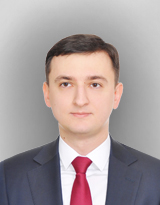
Maxim A. Starovoit, Postgraduate Student, Department of Administrative Law and Procedure named after L.L. Popov
Moscow
References
1. Alekseev S. S. Obshchaya teoriya prava: kurs: v 2 t. — M.: Yurid. lit., 1982.
2. Ivliev G. P., Egorova M. A. Yuridicheskaya problematika pravovogo statusa iskusstvennogo intellekta i produktov, sozdannykh sistemami iskusstvennogo intellekta // Zhurnal rossiyskogo prava. — 2022. — № 6. — S. 32–46.
3. Medvedev A. I. Pravovye aspekty iskusstvennogo intellekta i smezhnykh tekhnologiy // Zhurnal Suda po intellektualnym pravam. — 2022. — Vyp. 4 (38). — S. 48–63.
4. Musimovich M. V. Pravovye aspekty regulirovaniya trudovykh otnosheniy v usloviyakh ispolzovaniya iskusstvennogo intellekta pri podbore i vysvobozhdenii personala // Ekonomika truda. — 2024. — T. 11. — № 10. — S. 1591–1604.
5. Ponkin I. V., Redkina A. I. Iskusstvennyy intellekt s tochki zreniya prava // Vestnik Rossiyskogo universiteta druzhby narodov. Seriya «Yuridicheskie nauki». — 2018. — T. 22. — № 1. — S. 91–109.
6. Arduini S., Beck T. Artificial Intelligence in Recruitment and Hiring Process: Is It Useful to Reduce Biases? // Shaping Tomorrow: Gender Perspectives in a Sustainable World / ed. by P. Paoloni. — Cham : Springer Nature, 2025. — P. 247–264.
7. Rejmaniak R. Bias in Artificial Intelligence Systems // Białostockie Studia Prawnicze. — 2021. — Vol. 26. — Issue 3. — P. 25–42.
8. Ruiyu Zhang, Lin Nie. Enhancing Citizen-Government Communication with AI: Evaluating the Impact of AI-Assisted Interactions on Communication Quality and Satisfaction // URL: https://ssrn.com/abstract=5107547.
Review
For citations:
Starovoit M.A. Administrative Law Regulation of the Use of Artificial Intelligence Technologies in Executive Authorities’ Personnel Management. Actual Problems of Russian Law. 2026;21(1):51-60. (In Russ.) https://doi.org/10.17803/1994-1471.2026.182.1.051-060
Views:
342
JATS XML




 Email this article