


The Legal Framework for Countering Cyber Threats to Digital Equipment of Election Commissions in the United States
https://doi.org/10.17803/1994-1471.2026.185.4.176-182
Abstract
The study analyzes the legal framework for countering cyber threats to digital equipment of election commissions in the United States of America. The author concludes that, despite the lack of established and unified norms at the federal legislative level, the legal basis for the work of election commissions in terms of ensuring the security of digital equipment can generally be characterized as satisfactory. The presence of significant legal gaps is largely compensated by the influence of two mutually influencing factors. On the one hand, the US Election Assistance Commission and the Cybersecurity and Infrastructure Security Agency provide US election officials with high-quality methodological support to counter cyber threats. On the other hand, the system of informal bipartisan control over the organization of elections ensures that election organizers comply with most of the recommendations of federal bodies, since ignoring them by any of the political forces implies giving the competing party a possible advantage.
About the Author
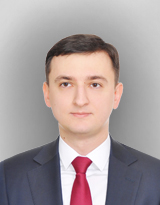
A. V. Shaposhnikov
Kutafin Moscow State Law University (MSAL)
Russian Federation
Russian Federation
Aleksey V. Shaposhnikov - Chairman of the Moscow City Duma, Cand. Sci. (Law), Honored Lawyer of the Russian Federation, Associate Professor, Department of Constitutional and Municipal Law, Kutafin Moscow State Law University (MSAL).
Moscow
References
1. Kozlova E. I. Obosnovanie novykh kontseptsiy rossiyskoy konstitutsii v pravovoy teorii // Lex russica. — 2009. — T. 68. — № 2. — S. 311–321.
2. Komarova V. V. Politicheskie prava grazhdan Rossii v tsifrovoy srede // Pravo i tsifrovaya ekonomika. — 2021. — № 4 (14). — S. 63–72.
3. Komarova V. V. Elektronnaya demokratiya: mify i realnost // Uchenye zapiski Khudzhandskogo gosudarstvennogo universiteta imeni akademika B. Gafurova. Seriya gumanitarno-obshchestvennykh nauk. — 2016. — № 3 (48). — S. 44–52.
4. Shaposhnikov A. V. Konstitutsionno-pravovoe regulirovanie ispolzovaniya tsifrovykh tekhnologiy pri osushchestvlenii videonablyudeniya za vyborami i referendumami // Aktual’nye problemy rossijskogo prava. — 2023. — № 10. — S. 20–27.
5. Barber B. If Mayors Ruled the World: Dysfunctional Nations, Rising Cities. — Yale University Press, 2013. — 432 p.
6. Hasen R. L. Election Meltdown: Dirty Tricks, Distrust, and the Threat to American Democracy. — Yale University Press, 2020.
7. Holbein J. B., Hillygus D. S. Making Young Voters: Converting Civic Attitudes into Civic Action. — Cambridge University Press, 2020. — 282 p.
8. Lindner R., Aichholzer G. E-Democracy: Conceptual Foundations and Recent Trends // European E-Democracy in Practice / L. Hennen, I. van Keulen, I. Korthagen et al. (eds.). — Springer, 2020. — P. 11–45.
Review
For citations:
Shaposhnikov A.V. The Legal Framework for Countering Cyber Threats to Digital Equipment of Election Commissions in the United States. Actual Problems of Russian Law. 2026;21(4):176-182. (In Russ.) https://doi.org/10.17803/1994-1471.2026.185.4.176-182
Views:
178
JATS XML




 Email this article